- Atlanta Airport U.S. Customs Declarations: Duty-Free Limits, Agriculture Screening, and Re-Entry Guide
- Exemption Allowances: Duty-Free Value and Personal Thresholds
- Agriculture Inspections and Food Import Restrictions
- Mandatory Food Declarations
- CBP Agriculture Canine Teams
- Currency Declarations and Souvenir Valuations
- Secondary Inspection: Triggers, Search Protocols, and Resolution
- Understanding Secondary Inspection Triggers
- Secondary Screening Procedures
- Operational Re-Entry Checklist for Arriving Fliers
- Operational Metadata Verification
Atlanta Airport U.S. Customs Declarations: Duty-Free Limits, Agriculture Screening, and Re-Entry Guide
Arriving from an overseas destination into Hartsfield-Jackson Atlanta International Airport (ATL) requires completing federal border processing before entering the United States. Successfully clearing customs declarations returning to us atl border halls manage is mandatory for every passenger, whether concluding travel in Georgia or connecting onward to domestic flights. Administered by U.S. Customs and Border Protection (CBP) inside the Maynard H. Jackson Jr. International Terminal, the inspection process protects domestic biosafety and enforces trade tax regulations.
Travelers frequently ask: what can i bring back from abroad customs atl officers will permit through the checkpoint? Determining what requires formal disclosure prevents unexpected border penalties. From calculating personal item exemptions to presenting gifts and packaged specialty foods, understanding the rules for importing goods through hartsfield jackson customs guarantees a seamless, stress-free return to the United States.
Advertisement
End Advertisement
Exemption Allowances: Duty-Free Value and Personal Thresholds
Federal customs law establishes clear financial limits on merchandise purchased abroad before import duty taxes apply.
| Traveler Classification | Standard Value Exemption | Alcohol Limits | Tobacco Allowances |
|---|---|---|---|
| Returning U.S. Residents | $800 per traveler (every 30 days) | 1 Liter (21+ years of age) | 200 cigarettes & 100 cigars |
| Caribbean Basin / Insular Areas | $1,600 per traveler | Up to 5 Liters (origin dependent) | Up to 1,000 cigarettes (in-quota) |
| Non-Resident Foreign Visitors | $100 total gift allowance | 1 Liter (21+ years of age) | 200 cigarettes & 100 cigars |
| Household Family Group | Combined total value filing | Per adult individual limits apply | Per adult individual limits apply |
Understanding baseline duty free limits for returning us citizens is essential when shopping overseas. The standard exemption allows returning residents to bring in up to $800 worth of merchandise duty-free, provided the stay abroad exceeded 48 hours. When reviewing available duty tax exemptions returning residents can claim, qualifying family members residing in the same household may pool their individual exemptions on a joint declaration, making high-value luxury purchases easier to clear without paying surplus duties.
Advertisement
End Advertisement
Agriculture Inspections and Food Import Restrictions
Safeguarding American agricultural ecosystems is one of CBP’s primary missions at international ports of entry.
Mandatory Food Declarations
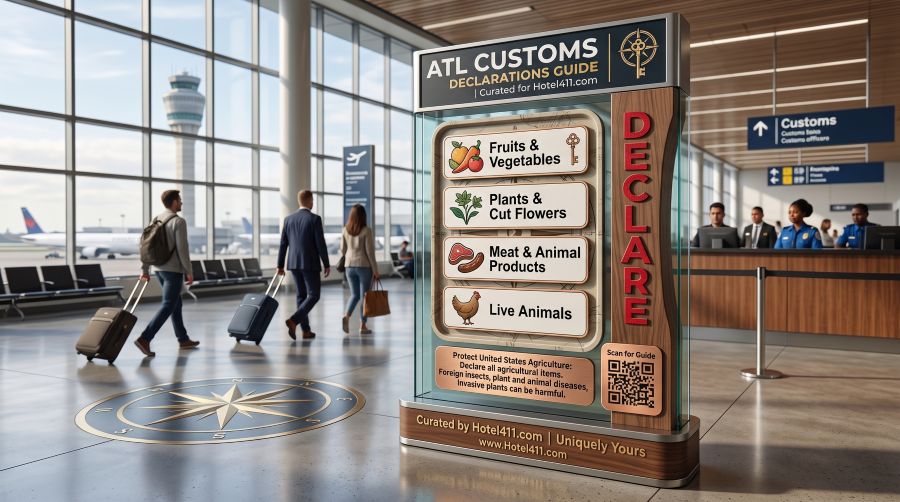
The rules governing bringing food into the us at atlanta airport require 100 percent transparency: all consumable agricultural items must be declared. Commercially packaged baked goods, candies, chocolates, roasted coffee beans, and commercially packaged teas are generally permissible. However, fresh fruits, vegetables, live plants, seeds, and soil are strictly regulated or outright prohibited to prevent introducing foreign invasive pests.
CBP Agriculture Canine Teams
Passing through the agricultural inspection us customs atl operates inside the baggage claim hall involves active screening by CBP Agriculture Specialist canine teams (the “Beagle Brigade”). Highly trained detector dogs sniff luggage carousels for hidden meats, fresh produce, and animal derivatives. Fresh, dried, or canned meat products—including cured European sausages, poultry, and beef jerky—are confiscated immediately. Failing to declare food items carries severe federal civil penalties, with fines starting at $300 for first-time undeclared agricultural violations.
Advertisement
End Advertisement
Currency Declarations and Souvenir Valuations
Border regulations require precise documentation for financial instruments and commercial goods transported across international lines.
- Currency Reporting Protocols: There is no limit on the total amount of money travelers may bring into or out of the country. However, declaring cash over 10000 customs atl mandates is legally required. Any traveler or family group carrying combined cash, money orders, cashier’s checks, or negotiable instruments exceeding $10,000 USD must file FinCEN Form 105. Failing to report currency can lead to immediate asset forfeiture and criminal penalties.
- Souvenirs, Art, and Commercial Gifts: When declaring souvenirs and gifts customs atl inspectors process, itemize purchases on your digital kiosk screen or Mobile Passport Control (MPC) app. Retain sales receipts for jewelry, leather goods, artwork, and electronics to substantiate fair retail purchase values.
- Counterfeit and Intellectual Property Violations: Pirated electronics, counterfeit designer apparel, trademark-infringing luxury handbags, and knock-off watches violate federal trademark laws and are subject to immediate confiscation without compensation.
Advertisement
End Advertisement
Secondary Inspection: Triggers, Search Protocols, and Resolution
While most travelers clear primary border passport control in under two minutes, select passengers are directed to secondary inspection rooms.
Understanding Secondary Inspection Triggers
Entering the cbp secondary inspection process atl maintains does not mean you have broken federal law. Referrals to secondary occur for routine operational reasons: random administrative verifications, biometric discrepancies, agricultural cargo audits, visa status clarifications, or matching common names flagged in federal watchlists. In addition, declaring complex merchandise quantities or agricultural seeds automatically routes travelers to specialized secondary counters.
Secondary Screening Procedures
Inside the secondary processing room, officers conduct detailed interviews, review flight itineraries, and physically inspect baggage contents with X-ray scanners. Remain patient, polite, and honest with inspecting officers. Answer questions directly, produce physical purchase receipts or import permits when requested, and keep electronic devices stowed, as cellular phone and camera usage is strictly prohibited inside all CBP inspection areas.
Advertisement
End Advertisement
Operational Re-Entry Checklist for Arriving Fliers
Follow this essential customs checklist to ensure swift re-entry into the United States at Atlanta Airport:
- Use the Mobile Passport Control (MPC) App: Download the free, official CBP MPC app upon touchdown to submit your customs declaration digitally, granting access to dedicated expedited inspection lanes in Concourse F.
- Keep Shopping Receipts Organized: Store foreign receipts for duty-free alcohol, perfume, luxury goods, and electronics in your carry-on bag to establish exact values if an officer requests proof of purchase.
- When in Doubt, Always Declare: If you are unsure whether a foreign packaged food, herbal supplement, or souvenir is permissible, always check “Yes” on your declaration form. Declaring an item protects you from civil fines even if the product is ultimately deemed inadmissible and confiscated.
- Connecting Baggage Recheck: After clearing passport control and collecting checked suitcases in the customs hall, drop your bags onto the connecting luggage belt immediately outside the exit doors before clearing TSA re-screening to board the Plane Train.
Operational Metadata Verification
- Post Category: /international-travel/
- Post URL: /international-travel/atl-customs-declarations-guide/
- H1 Title: ATL Customs Declarations Guide
- H2 Descriptive Title: Atlanta Airport U.S. Customs Declarations: Duty-Free Limits, Agriculture Screening, and Re-Entry Guide
- Meta Title: ATL Customs Declarations Guide: Duty-Free Limits & Food Rules
- Meta Description: Complete guide to U.S. Customs declarations at Atlanta Airport. Learn duty-free limits, food inspection rules, cash reporting, and CBP procedures at ATL.
- Post Page Excerpt: <h2>Key Terminal Amenities</h2> <p>Returning to the United States through Atlanta Airport? Discover the complete operational guide to CBP customs declarations, duty-free exemption limits, and baggage clearance procedures inside Concourse F.</p> <h3>Key Terminal Amenities</h3> <p>Learn what food items are permitted through agricultural inspection, understand currency reporting requirements for cash over $10,000, review secondary screening procedures, and itemize gifts and souvenirs for rapid re-entry.</p> <ul> <li>$800 personal duty-free exemption for returning U.S. citizens</li> <li>Strict agricultural food inspection guidelines and canine screening</li> <li>Expedited customs processing via Mobile Passport Control (MPC)</li> </ul>
- Navigation Description: In-depth operational guide to U.S. Customs declarations at Atlanta Airport, covering duty-free allowances, agricultural inspections, cash reporting, and CBP re-entry protocols.
- Top 10 Search Terms Integrated: customs declarations returning to us atl, what can i bring back from abroad customs atl, duty free limits for returning us citizens, agricultural inspection us customs atl, declaring cash over 10000 customs atl, bringing food into the us at atlanta airport, duty tax exemptions returning residents, cbp secondary inspection process atl, declaring souvenirs and gifts customs atl, importing goods through hartsfield jackson customs