- Atlanta Airport International Baggage Recheck: Customs Luggage Drop and Connection Guide
- Step-by-Step Sequence: Customs Inspection to Luggage Re-Drop
- Baggage Drop Counters: Concourse F and Delta Operations
- Concourse F Airline Desks
- Delta Air Lines Dedicated Drop Belts
- Packing Rules and TSA Re-Screening Checkpoints
- Missed Connections and Rebooking Strategies
- What to Do When Delays Occur
- Airline Transfer Protections
- Essential Advice for International-to-Domestic Transfers
Atlanta Airport International Baggage Recheck: Customs Luggage Drop and Connection Guide
Arriving at Hartsfield-Jackson Atlanta International Airport (ATL) from an overseas origin involves a mandatory procedural sequence governed by federal border security. For travelers with onward domestic flights, navigating a connecting flight after international arrival atl terminals process requires claiming your bags, walking through border clearance, and finding where to drop your luggage before heading toward your departure gate. Under United States federal regulations, every passenger entering the country must personally take physical possession of all checked items during border inspections, regardless of whether baggage tags display an ultimate domestic destination.
The transition between international deplaning and domestic departures operates smoothly once you understand the layout of the Federal Inspection Station (FIS). Knowing the exact operational flow for transfer baggage international to domestic atl facilities manage ensures you do not haul heavy bags to the public check-in lobby unnecessarily. From locating airline re-drop belts to clearing transit security screening, this guide provides an essential walkthrough to keep your itinerary moving without friction.
Advertisement
End Advertisement
Step-by-Step Sequence: Customs Inspection to Luggage Re-Drop
The sequence for claiming bags at customs and rechecking them for connecting domestic flights follows a rigid four-stage layout designed for airport security.
| Processing Step | Physical Location | Action Required |
|---|---|---|
| 1. Primary Passport Control | Concourse F or E FIS Hall | Clear CBP via Global Entry, MPC, or standard booths |
| 2. Baggage Claim Carousels | FIS Lower Level Carousel Hall | Retrieve all checked luggage, boxes, and oversized items |
| 3. Customs Egress Inspection | Customs Exit Podiums | Pass agricultural verification with all belongings |
| 4. Baggage Re-Drop Corridors | Immediately past exit doors | Place tagged luggage directly onto airline transfer belts |
| 5. TSA Connecting Screening | Airside Transit Checkpoint | Clear carry-on screening and board the Plane Train |
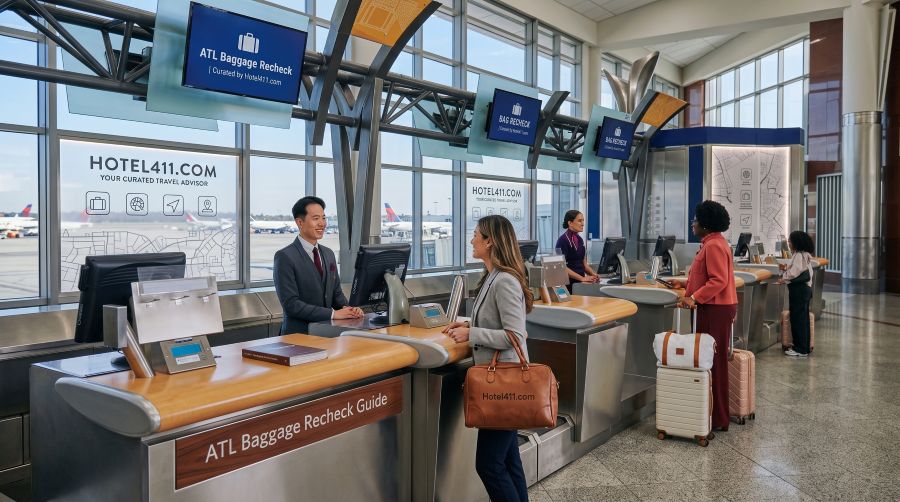
If you are confused about where do i drop checked luggage after customs, look straight ahead as soon as you clear the frosted customs exit doors. Dedicated conveyor belts and agent counters sit directly in the transit hall before you reach any public lobby or domestic security checkpoint.
Advertisement
End Advertisement
Baggage Drop Counters: Concourse F and Delta Operations
Navigating the post-customs transfer area centers on airline counter alignments positioned specifically for arriving transfers.
Concourse F Airline Desks
Upon exiting the primary baggage hall into the Maynard H. Jackson Jr. International Terminal arrivals zone, passengers pass directly beside official baggage recheck desks concourse f operates. Staffed airline counters line both sides of the corridor, providing customer support for passengers whose bags are not yet tagged to their onward destination or who need updated boarding passes printed.
Delta Air Lines Dedicated Drop Belts
Because Atlanta serves as Delta’s primary worldwide hub, the vast majority of connecting travelers utilize the dedicated delta baggage drop after customs atl maintains. If your luggage tags were already printed at your departure station abroad showing your final domestic airport code, you do not need to wait in a service line. Simply hand your suitcases directly to Delta baggage handlers stationed along the motorized conveyor drop line. The handler scans the barcode tag, verifies your connecting flight number, and loads the bag onto automated belts leading to domestic sorting bays.
Advertisement
End Advertisement
Packing Rules and TSA Re-Screening Checkpoints
After completing your concourse f luggage transfer, you must immediately clear physical passenger screening before accessing the Plane Train or domestic departure concourses.
- Secure Packing for Duty-Free Liquids: Any duty-free bottles of wine, spirits, or fragrances exceeding 3.4 ounces purchased abroad must be stowed inside your checked suitcases before dropping them on the transfer belt. If you keep large liquid bottles in your carry-on bag, TSA officers will confiscate them unless they are sealed in approved tamper-evident bags with intact receipts.
- Expedited Screening Availability: Passengers wondering if they can use pre check baggage after customs atlanta should note that luggage itself undergoes standard X-ray sorting, but travelers with the TSA PreCheck indicator on their boarding passes can enter dedicated expedited lanes at the Concourse F transit security checkpoint.
- Boarding the Plane Train: Once cleared through transit security, take the escalators down to the Concourse F Plane Train platform. Trains run every two minutes, whisking connecting passengers across the airfield to Concourses E, D, C, B, A, or T in under 10 minutes.
Advertisement
End Advertisement
Missed Connections and Rebooking Strategies
Extended border clearance wait times or delayed baggage carousels occasionally create tight transfer windows that lead to missed flight departures.
What to Do When Delays Occur
If immigration queues or delayed international baggage delivery cause you to miss connecting flight customs atl agents will assist you right at the transfer area. You do not have to exit to the domestic terminal curbside to find help. Airline customer service desks located immediately adjacent to the domestic connection baggage drop atl area can rebook your itinerary onto the next available departure, retag your bags, and issue updated boarding documents on the spot.
Airline Transfer Protections
When international and domestic itineraries are booked on a single ticket, airlines automatically protect missed connections resulting from customs or border control delays. If you booked separate tickets across unaffiliated carriers, however, you must claim your luggage, take the terminal shuttle to the Domestic Terminal check-in lobby, and pay any applicable flight change or checked bag fees with your second carrier.
Advertisement
End Advertisement
Essential Advice for International-to-Domestic Transfers
To ensure a seamless baggage recheck and transit experience at Atlanta:
- Verify Final Destination Baggage Tags: Always inspect the barcode tags applied at your overseas departure station. If the tag lists your final U.S. city code, you can use the express conveyor drop line immediately after clearing customs exit doors without waiting in ticket counter queues.
- Keep Boarding Passes Accessible: Ground handlers scanning rechecked luggage require a quick visual check of your connecting boarding pass to confirm that baggage weights and passenger names match your manifest.
- Maintain Adequate Layover Windows: Always book international-to-domestic flight connections with at least a 90-minute to two-hour layover cushion to account for baggage carousel offloading times, customs exit lines, and TSA transit screening.